The Right Teammate Can Change Your Project
When Mateo joined Hack Your Summer, he wasn't looking for something to build from scratch. He was looking for an engineering problem.
A PhD student at the University of Illinois Urbana-Champaign studying aerospace engineering, Mateo spends most of his time thinking about 3D printing, composite materials, and manufacturing. When introductions started in the Hack Your Summer Discord, he posted exactly that. If anyone was building something that needed engineering or fabrication, he'd love to help.
A day later, he found Nathan.
Nathan, an undergraduate studying computer science, had already been developing “ClickSafe”, a personal emergency alert device inspired by products like Life Alert but designed for much smaller communities. Instead of automatically contacting emergency services, ClickSafe lets the wearer alert the people most likely to help first, whether that's family members, trusted friends, or campus security.
Nathan already had the electronics, wireless communication, and an early prototype. What he didn't have was a product enclosure someone would actually want to carry.
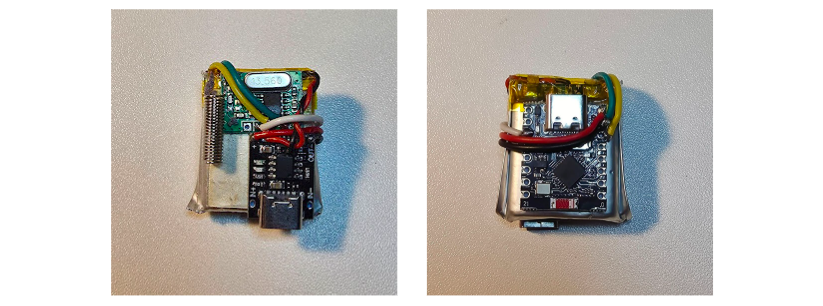
Left: Nathan's prototype esp32 board for transmitter mounted on battery. Right: The other side of the battery with charging port and transmitter.
Mateo immediately saw where he could contribute.
Rather than building another software feature, he offered to redesign the physical housing. They jumped on a video call, talked through the hardware, and naturally divided the work. Nathan focused on the electronics, networking, and embedded software. Mateo took ownership of the enclosure, refining the CAD model and preparing it for 3D printing.
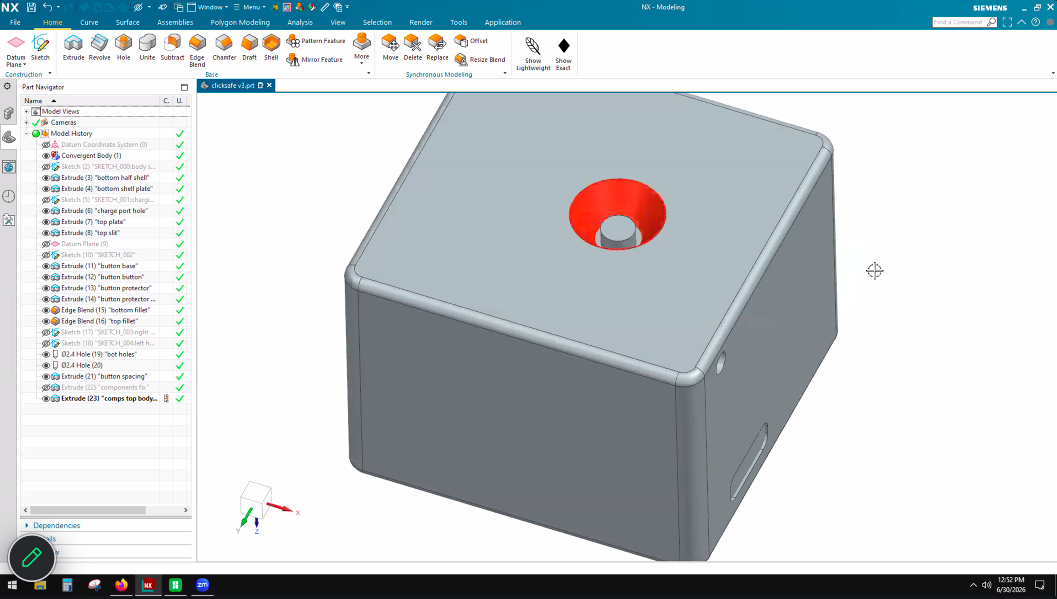
Mateo’s CAD model of physical enclosure for ClickSafe.
It's an easy detail to overlook, but it's one that shows up on real engineering teams all the time. Not every collaborator joins at the beginning. Sometimes the most valuable contribution is recognizing where someone else's project needs your particular expertise.
The project is still evolving. Nathan continues refining the networking architecture while Mateo iterates on the printed enclosure, fixing design issues, adjusting the model, and turning digital designs into physical prototypes that can actually be held, tested, and improved.
That cycle is the reality of hardware development. You don't just write code and press run. Every iteration means redesigning parts, waiting on a printer, testing the fit, discovering the next problem, and printing again.
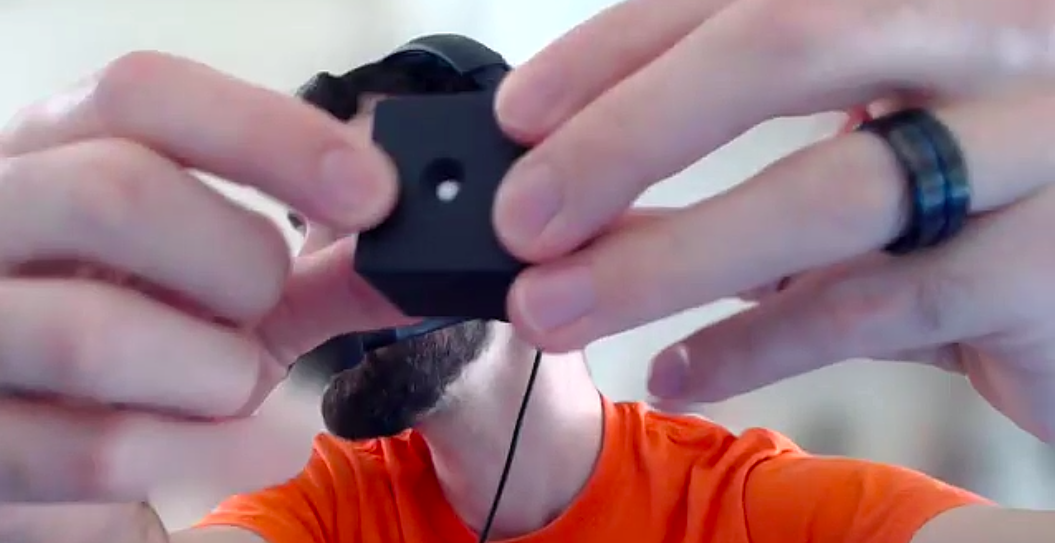
Mateo showing a 3D printing of the ClickSafe enclosure.
As the first Hack Your Summer cohort wraps up, ClickSafe is becoming something neither student would have built alone. Nathan's idea now has a purpose-built physical form, and Mateo found exactly the kind of engineering challenge he was hoping to tackle when he joined the program.
If you're wondering whether you need to arrive with the perfect idea, or whether your skills fit someone else's project, ClickSafe offers a different perspective. Some of the best collaborations begin with a simple conversation. Sometimes the most valuable thing you build during Hack Your Summer isn't your own idea. It's the missing piece that helps someone else's come to life.
Think you'd rather join an existing project than start from scratch? Or maybe you're still looking for the right idea or teammates?
That's exactly what the next Hack Your Summer cohort is for.
Registration for Session 2 closes soon! If you're curious about building something real this summer, now's the time to sign up!