Mind the Gap: A Transit Project in Progress
Sasha Patil didn't spend her first week at Hack Your Summer building. She spent it figuring out what was worth building.
A graduate student interested in climate and urban systems, Sasha arrived with three ideas and posted them in the HYS Discord looking for feedback. The advice she got back was simple: stop thinking about the whole country. Pick one place.
She chose Tampa. It wasn't a random decision. Sasha lives in the area, and she wanted to build something that could be useful to the people and communities she already knew.
As she dug into the data, the project evolved. Instead of asking where extreme heat would hit hardest, she found herself asking a different question: where do people most need public transit, and where is it falling short?
The result was the Tampa Mobility Gap Explorer, an interactive dashboard designed to help City of Tampa and Hillsborough County planners visualize gaps in transit access.
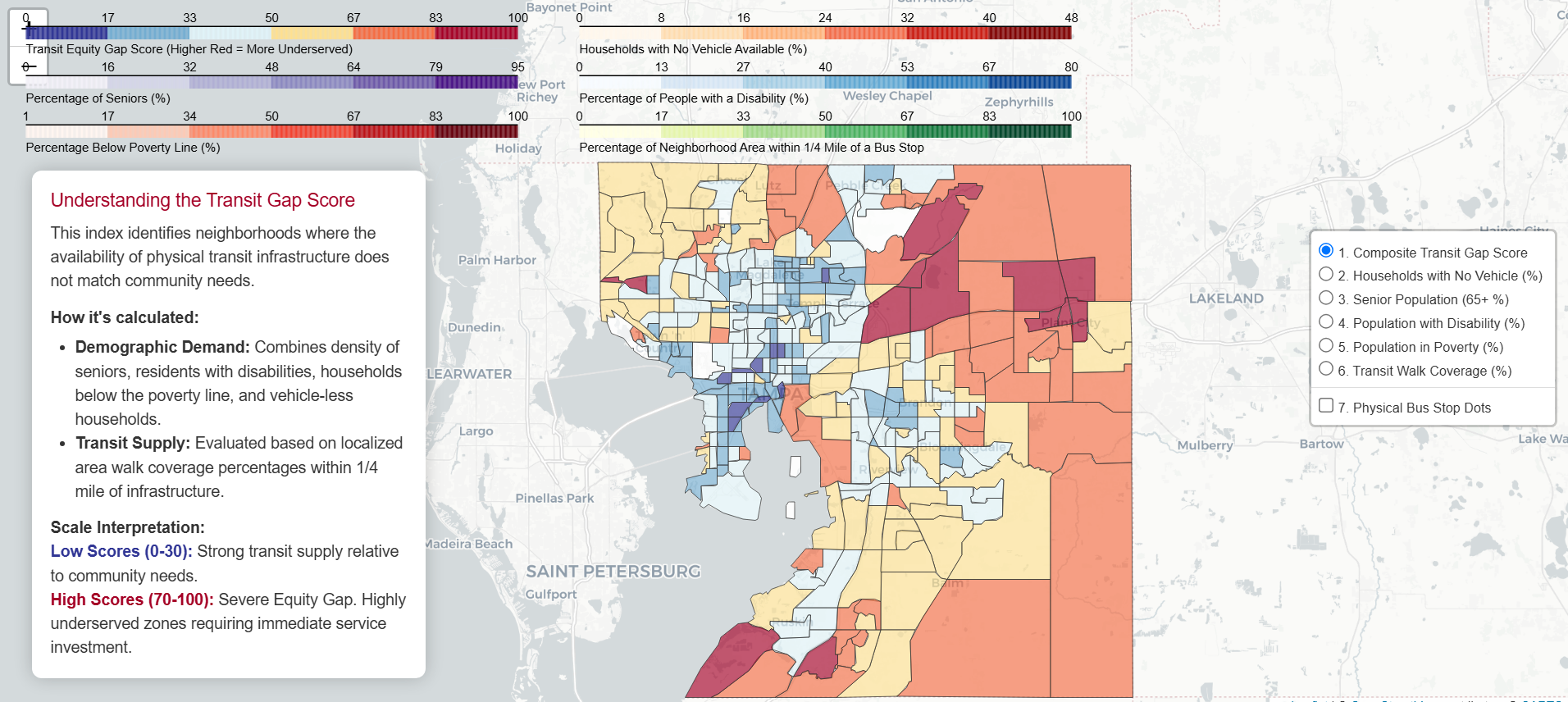
The dashboard's main view displays a Transit Gap Score from 0–100 for every census tract, combining factors like household vehicle ownership, disability rates, income, and proximity to bus stops. Planners can also explore each underlying layer individually.
The Explorer layers a transit system map with information about the people who are most likely to rely on it, including age, income, disability status, and household vehicle ownership. It also highlights major employment centers to identify neighborhoods where better transit could have the biggest impact on connecting residents to jobs.
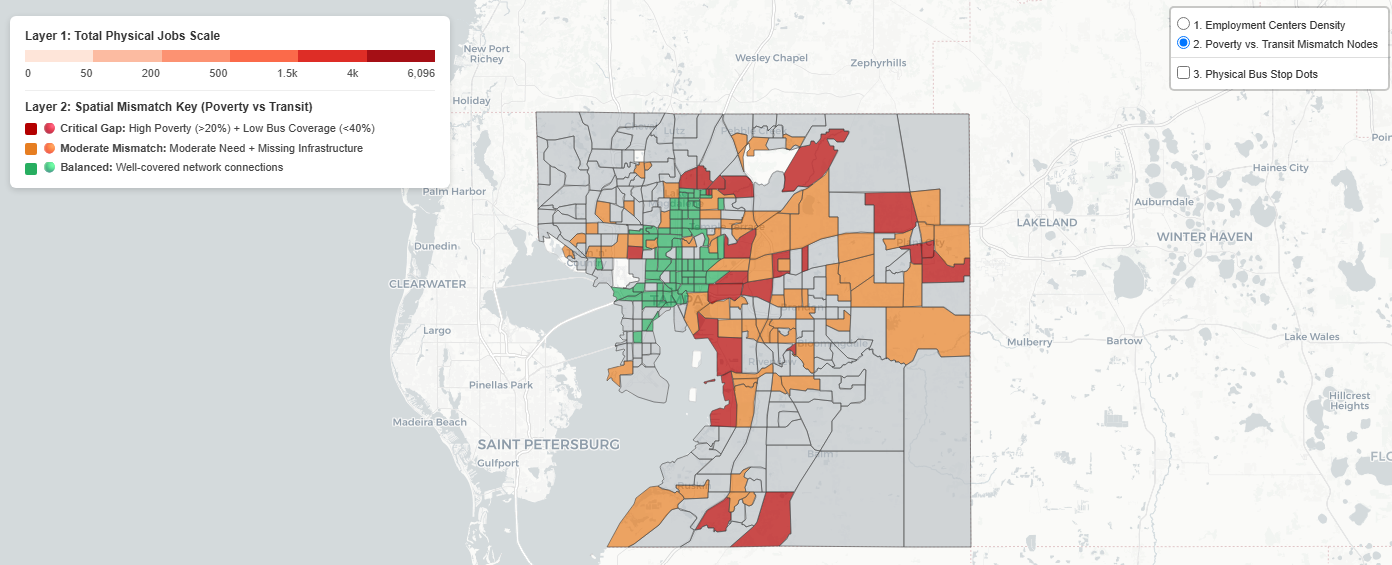
Here, the dashboard highlights neighborhoods where poverty rates are high but transit access is limited. The color-coded map helps planners quickly identify areas with the greatest transportation gaps.
Behind the scenes, Sasha combined multiple public datasets into a single interactive tool and developed a Transit Gap Score to identify places where high community need, nearby jobs, and limited transit overlap. The result is more than a map. It's a way to help planners prioritize where future transit investments could make the biggest difference. The platform also features an Infrastructure Scenario Simulator that lets planners test potential improvements and see how neighborhood accessibility changes.
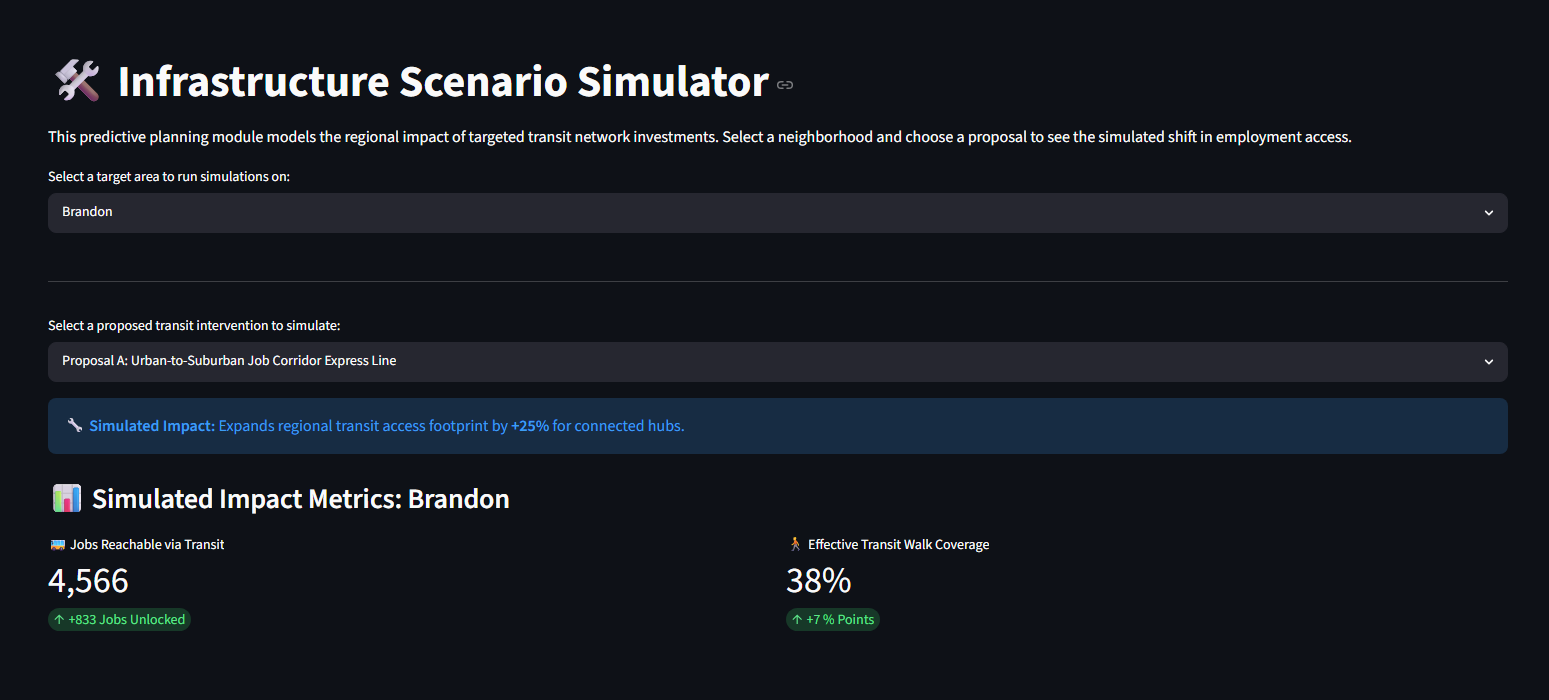
The Infrastructure Scenario Simulator lets planners select a neighborhood and test a proposed transit investment. The dashboard estimates outcomes such as newly accessible jobs and improvements in neighborhood walkability.
Just as importantly, Sasha documented the work the way professional teams do. Her GitHub repository includes the underlying census and transit datasets, a modular Python pipeline with clearly separated processing steps, and the deployed interactive dashboard. By sharing the full workflow, Sasha makes it easy for others to understand how the project was built, reproduce the results of her analyses, and build on her work. The repository tells the story behind the dashboard, making it a much stronger portfolio piece than a finished visualization alone.
Like many Hack Your Summer projects, this one changed shape as Sasha learned more about the problem she wanted to solve. Sasha shared rough ideas before she had anything built, accepted feedback that meant narrowing her scope, and let the project become something different from what she originally imagined.
That's often what building looks like. The best projects don't always begin with the perfect idea. They get better because you're willing to ask for feedback, change direction, and focus on solving one real problem for one real community.
The Tampa Mobility Gap Explorer is still evolving, but it's already a great example of starting small to solve a meaningful problem. Rather than trying to improve transportation everywhere, Sasha focused on one city she knows well, and built something that could make a real difference there.
Interested in building something for your own community? Registration for Hack Your Summer Session 2 closes Friday July 10 at midnight Pacific. We'd love to see what you can build.